
“Books are the quietest and most constant of friends; they are the most accessible and wisest of counselors, and the most patient of teachers.” Charles William Eliot
My aim with the must-read book list is to curate a collection of books to read this coming year that provide thoughtful, unique perspectives on education and learning. This is the fourth-annual post featuring seven books that cross disciplines—it includes books from business, science and technology and digital culture. My goal is to try to gain a perspective on the direction education might be heading in an effort to anticipate what we can do to remain relevant, current and effective.
1. Social Media for Academics, by Mark Carrigan
I first learned about this book when reading an interview with author Carrigan published on Inside Higher Ed. Since interest in the title and topic was so high when sharing an overview on social media and due to its practical nature, I placed it number one on my must-read list. The book appears instructive, a true guide as the title suggests. There are nine chapters in all; chapter two is available to preview here.
2. Learning Environment Modeling: Redefining Learning Environment Design
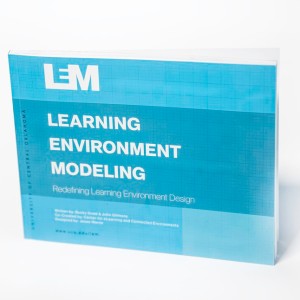
Learning Environment Modeling: Redefining Learning Environment Design, https://squareup.com/store/iled
“Learning Environment Models are blueprints used for communicating the design of learning environments.” http://cece.uco.edu/lem/
I’m looking forward to this book—it outlines a design method for creating learning experiences. The method is described as “a visual and collaborative [design] process for designing the spaces and places where people learn”. The concept of LEM is founded by a group of educators at University of Central Oklahoma who started the non-profit Institute for Learning Environment Design. The book is attractive and inviting. It makes effective use of white space and includes several diagrams illustrating key concepts. It’s for sale via the Institute for Learning Environment Design’s website.
3 . Weapons of Math Destruction, by Cathy O’Neil
We’ve read much about the potential of “Big Data” over the last couple of years, which essentially is data manipulated by algorithms to turn what is generated by individuals’ participation on digital platforms (e.g. LMS platforms). EDUCAUSE featured an article recently about the potential and pitfalls of big data in education, how algorithms can be used to predict student achievement, attrition, even patterns in course consumption. Activity by students produces vast data, yet, is it used responsibly and accurately? After listening to an interview with the author on NPR where O’Neil alludes to algorithms and public education, Weapons of Math Destruction seems a worthy and necessary read. Despite the author’s somewhat gloomy outlook on algorithms potential, the book’s made the list.
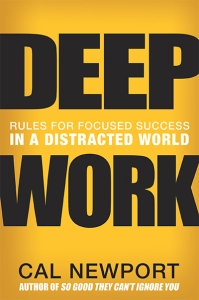 4. Deep Work: Rules for a Distracted World, by Cal Newport
“In DEEP WORK, author and professor Cal Newport flips the narrative on impact in a connected age. Instead of arguing distraction is bad, he instead celebrates the power of its opposite. Dividing this book into two parts, he first makes the case that in almost any profession, cultivating a deep work ethic will produce massive benefits. He then presents a rigorous training regimen, presented as a series of four “rules,” for transforming your mind and habits to support this skill.”
Intriguing. Perhaps the book holds insights educators and students can apply to enhance learning and development in our increasingly cluttered learning environments. The book has received solid reviews from The Economist, Wall Street Journal and The Guardian.
5. MOOCs and Open Education Around the World, edited by Curtis Bonk, Mimi Lee, Thomas Reeves & Thomas Reynolds
A must-read list about education wouldn’t be complete without a title dealing with MOOCs. I chose this book for two key reasons, one is the publisher, Routledge— I have not been disappointed by the quality of their books, and second because of the main editor, Curtis Bonk, an e-learning scholar and author I have followed for several years because of his (early) innovative thinking on distance and open education. The book features insights and learning related to the delivery of MOOCs and other forms OERs in regions and nations around the world.
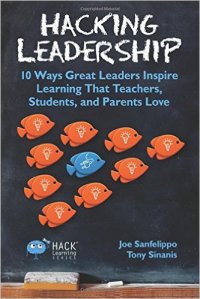 6. Hacking Leadership: 10 Ways Great Leaders Inspire Learning That Teachers, Students and Parents Love, by Joe Sanfelippo and Tony Sinanis
Geared to K-12 leaders, this is the fifth installment of a book on practical applications for educational leadership written by two school administrators. I’ve included it here because of its content—it appears relevant to current day learning issues and focuses on people, not technology. What confirmed the book as a must-read is chapter 8, the topic is empowering teachers to direct their own learning. The book also gets solid reviews…”This book is not only an easy read but very practical for school leadership. The suggestions are based very much on today’s schools and the community we serve. One of the best leadership books available with great information from cover to cover.” Melissa Boyle, Amazon, Verified Purchase
7. The Third Wave: An Entrepreneurs Vision of the Future, by Steve Case
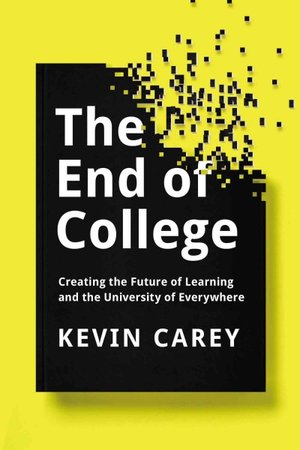
I like to read books by big-picture thinkers who give insight what the future might hold. In previous lists I’ve selected books that focus on higher education, last year’s list featured The End of College. The Third Wave is broader in scope, yet I chose it based on a talk I heard the author Steve Case give a few years ago. I was impressed by his insight into education and technology. Though the book’s description suggests its geared to entrepreneurs, it’s applicable to leaders of any type of institution including education given its emphasis on relationships (not just technology) with stakeholders in a digital age.
“Case explains the ways in which newly emerging technology companies (a growing number of which, he argues, will not be based in Silicon Valley) will have to rethink their relationships with customers, with competitors, and with governments; and offers advice for how entrepreneurs can make winning business decisions and strategies—and how all of us can make sense of this changing digital age”. (About, thethirdwavebook.com)
Closing
I look forward to another year of good company with some great books. Thank you for reading Online Learning Insights, which provides motivation for me to continue writing and sharing.


 Online Learning Insights